
13 Weekly Planner Ideas For Every Type Of Week

Weekly planner ideas usually come down to one question: which type of weekly spread will you actually use? I’ve been planning my weeks in a Bullet Journal since 2018, and I’ve tried many formats, from simple columns to time-blocked grids.
The truth is, the best weekly layout fits how your week really looks, whether it’s packed with appointments or mostly open.
So here are 13 different types of weekly spreads, with who each one suits and a quick way to create it. Pick one, try it for two weeks, and switch if it doesn’t click.

When I started Bullet Journaling in 2018, I picked my weekly spreads the way most of us do: by how pretty they looked. A gorgeous layout caught my eye; I’d redraw it every Sunday, and somewhere along the way, planning started to feel like a chore instead of a reset.
What changed things was paying attention to how I used each page rather than how it looked. I kept coming back to the same simple thing: an easy vertical layout with lots of writing space and a small section for the calendar and a weekly to-do list
Since then I’ve drawn floral two-page spreads, one-page weeklies, and plenty of experiments in between, but I still choose the same way every time, by asking what I’ll actually use.
So before you pick one of the 13 spreads below, here are the three questions I ask myself.
This post may contain affiliate links. They will be of no extra expense for you, but I receive a small credit. Please see my Disclosure for more details. Thank you for supporting Masha Plans!
How To Choose A Weekly Spread
Truthfully, every week is different and has different needs, and you reallywon’t know what works for you until you try it out. And layouts that work one week might not work another week.
Ok, that doesn’t sound very helpful, but trust me: the more you plan, the better you’ll understand yourself and your planning needs.
Meanwhile, start by asking yourself these three questions.
- How full is your week? Lots of appointments and tasks need bigger daily space (vertical, time-blocked). A quiet week works on one page.
- How much do you write? Short bullet points fit columns. Longer notes fit horizontal rows.
- How long do you want to spend setting it up? Five minutes points to minimalist or one-page. If you enjoy drawing, try a circle or a themed spread.
These ideas work in a Bullet Journal, a notebook, a store-bought planner, or a printable. Let’s dive into the ideas and pick a perfect weekly layout for you.
Each idea includes my recommendation for what it’s best for and how to start creating one. Plus, at the end of this post, you’ll also be able to get some FREE printables to get started with your planning right away!
Classic Weekly Planner Ideas
These four are the classic structures almost every other weekly spread is built from. If you’re new to weekly planning, or you’ve been bouncing between layouts and nothing sticks, start here.
They take a few minutes to draw, they’re easy to adjust halfway through a week, and once you know which one suits you, adding a goals box, a tracker, or a bit of decoration is simple.
Vertical Weekly Spread
Seven tall columns, one for each day, usually across two pages. It is the most familiar weekly layout and reads like a classic paper planner.
Best for: busy weeks with lots of small tasks and appointments.
How to create it: Divide the two pages into seven columns (four on the left page and three on the right works well), write the day and date at the top of each, and keep the weekend columns narrower if your weekends are quiet.

Horizontal Weekly Spread
Each day is a wide row across the page, so you write left to right like a normal line of text.
Best for: handwriting-heavy planning and longer notes.
How to create it: Divide one or two pages into seven horizontal bands, put the day name in a small box on the left, and use the space on the right for tasks and notes.
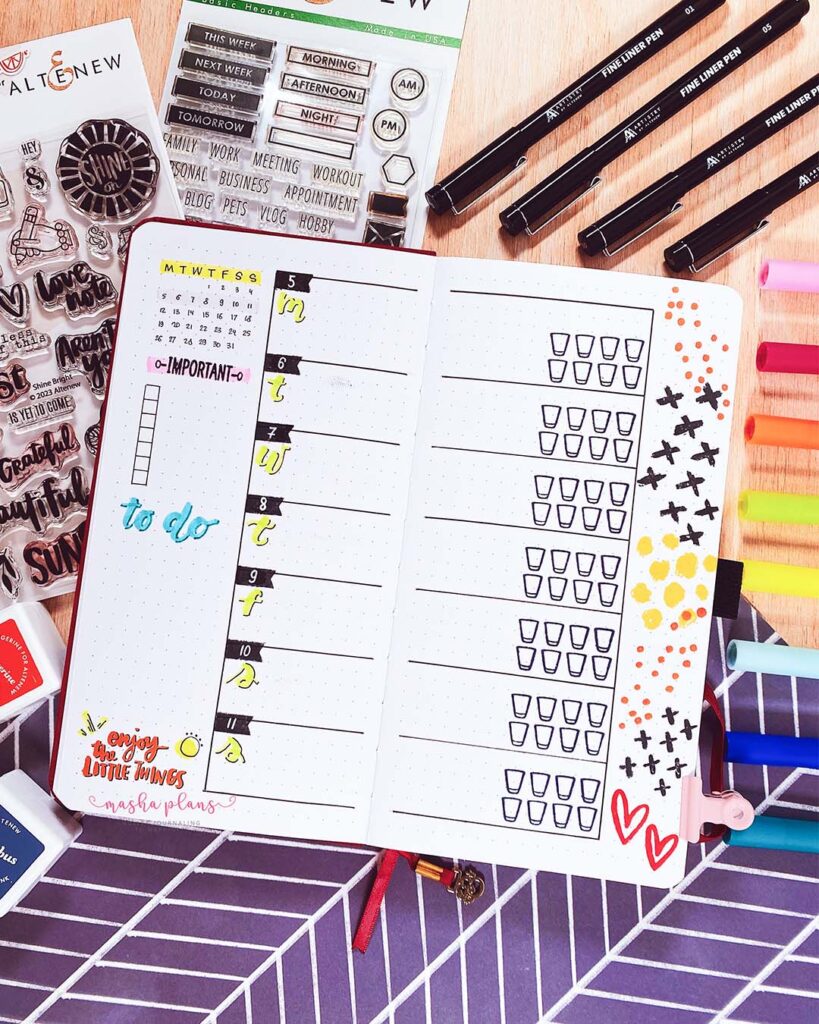
One-Page Weekly Spread
The whole week on a single page. It saves space and keeps planning light.
Best for: quieter weeks, larger notebooks, and anyone who only plans a few tasks per day.
How to create it: Split the page into eight boxes: one for each day and a final one for notes or a weekly to-do list.

Two-Page Weekly With A Sidebar
The days fill most of a two-page spread, and a narrow column along the right edge is kept free for extras. The sidebar is the flexible part: it can hold a to-do list one week and a habit tracker the next, without changing the rest of the layout.
Best for: people who like to add trackers, notes, or goals without crowding the days.
How to create it: Draw a vertical line about a quarter of the way in from the right edge of the right page (and /or the left edge of the left page). Divide the remaining space into seven day boxes. Use the strip you left on the right for the sidebar, and change what goes in it each week.

Weekly Planner Ideas For Busy Schedules
These four spreads are built for weeks when time is the tightest resource. Some show you exactly where your hours go, some keep tasks flexible when plans keep changing, and one takes care of the parts of your week that never change.
If your calendar is already full before you start planning, pick from this group.
Time-Blocked Weekly Spread
A grid with times down the side and days across the top, like a timetable. You can see exactly where your hours go.
Best for: meetings, shifts, classes, and anyone who plans around a schedule.
How to create it: List the hours down the left, starting from the time your day really begins. Draw seven columns, then color in blocks for different activities so the week is readable at a glance.
Dutch Door Weekly Spread
A cut-out layout where part of a page is trimmed so you can keep another spread, like a monthly calendar or tracker, visible next to your week.
Best for: people who want the bigger picture in sight while planning the week. Also great if you need that outlook while still having more space to plan your day.
How to create it: Step-by-step instructions are in my bujo weekly spread layout post, where I explain each cut and how to set the layout up.
Running List Weekly Spread
No boxes for each day. Instead, you keep one list of tasks and track when you did them.
Best for: unpredictable weeks where tasks move around a lot.
How to create it: Write your tasks down on the left page. On the other page, draw seven columns, one for each day. When you finish a task, mark it in that day’s column on the same line, and at the end of the week you can see what happened and when.

Weekly Planner Ideas With Extras
Once you have a layout you like, extras are what make it work harder for you. These four spreads add a small extra to your week, like a goals box, a habit tracker, a meal plan, or a review.
You can add each one to any of the layouts above, so you can build the page your week actually needs.
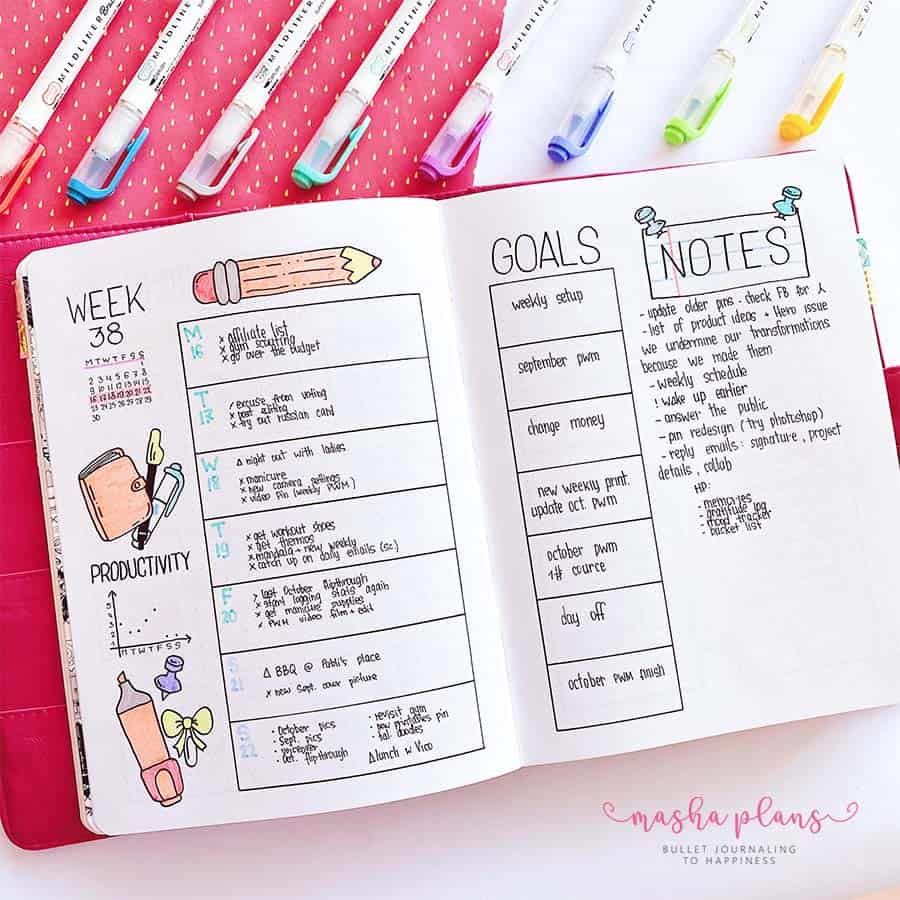
Weekly Spread With Priorities And Goals
Any layout you like, plus a small box for your top three priorities or a weekly goal.
Best for: anyone who feels busy all week but isn’t sure what moved forward.
How to create it: Add a box anywhere on the page for your weekly goals. Or, as I did in the layout below, create a small goals section for each daily box.
Weekly Spread With Habit And Self-Care Trackers
A weekly layout with a small tracker built in, so habits and self-care are part of the plan instead of a separate page.
Best for: building routines without opening another page.
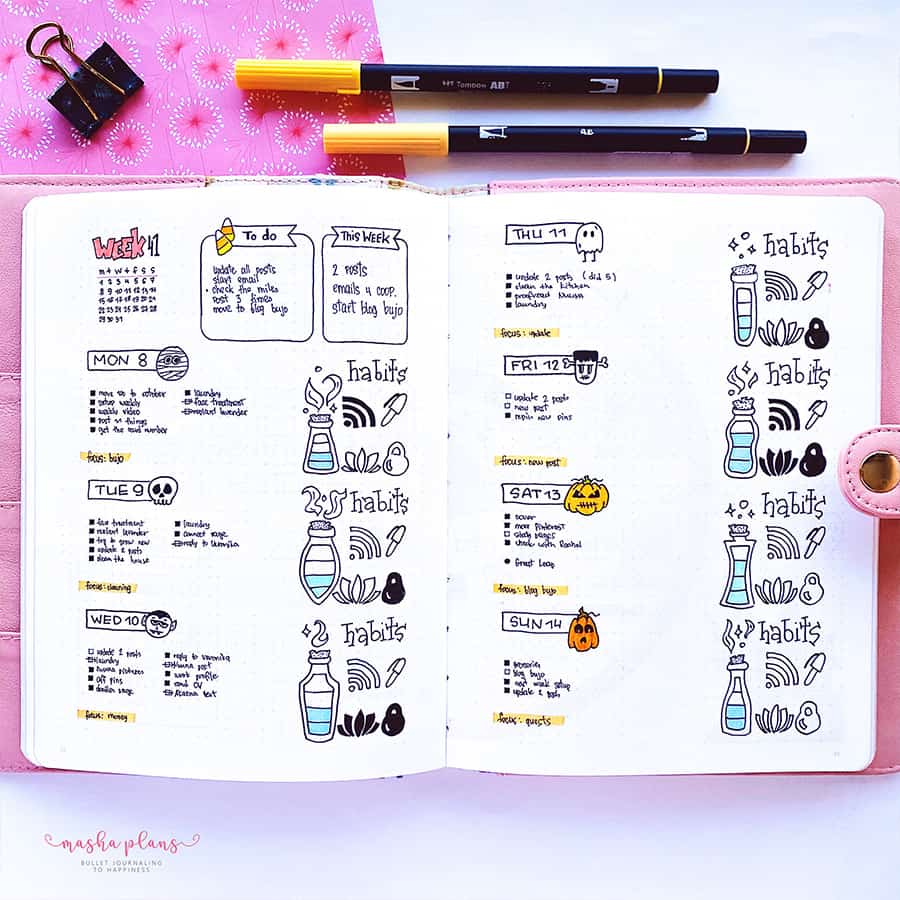
How to create it: Draw a thin grid under (or above) the daily boxes: three to five habits down the side and the days across the top. Keep the habits small, like water, reading, or stretching, so you actually fill it in. You can draw it yourself or use stickers like these.
Another option is to add little trackers to your daily sections, as I did in a weekly spread below. It is a bit extra, but it definitely was fun.
Weekly Meal Planner Spread
A weekly layout with a dinner line for each day and a grocery list beside it.
Best for: households that want fewer “what’s for dinner?” moments.
How to create it: Next to your daily boxes, add one line per day for dinner and a box for groceries.
Aesthetic Weekly Planner Ideas
Aesthetic weekly planner ideas are all about making your spread something you want to open. The layout does the work, and the style is what makes it feel like yours.
These three spreads add shape, simplicity, or a theme, so you can plan in a way that looks as good as it works. Pick one that suits your mood, or mix them with any layout above.
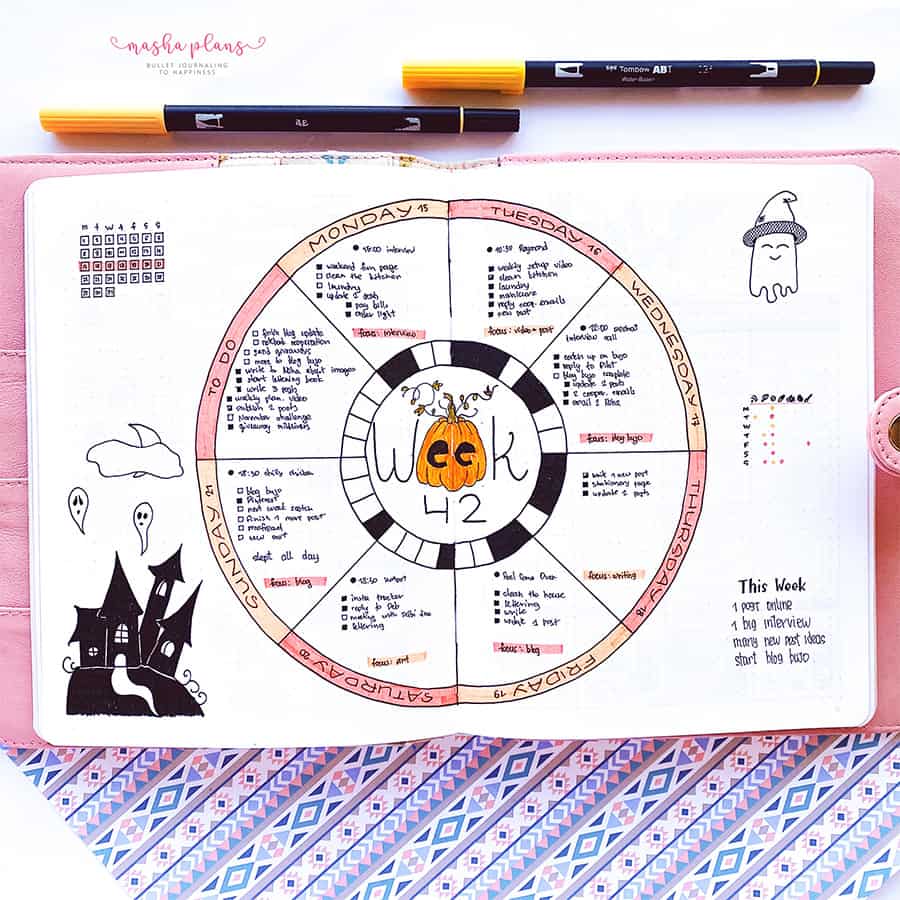
Circle Weekly Spread
The week inside a circle, with each day as a wedge and extra elements around the outside.
Best for: light planning and creative weeks, since the wedges fit short tasks best.
How to create it: Draw a circle with a compass, a stencil, or a round object, divide it into seven wedges, and write the days inside. Use the space around the circle for notes and a to-do list.
Minimalist Weekly Spread
Clean lines, simple date headers, and lots of white space, maybe with one small doodle.
Best for: beginners and anyone who wants a spread in five minutes.
How to create it: Choose a basic layout, like columns or rows; use thin lines; and keep the decoration to a single detail, such as a botanical doodle or a piece of washi tape in the corner.
My favorite way to do a minimalist setup is to use the grey markers, sometimes even using them instead of drawing daily boxes in pen.

Themed Aesthetic Weekly Spread
Take any layout and give it a theme: floral, cozy, seasonal, coffee, books. The theme is decoration, so the planning space stays the same.
Best for: people who plan for fun and want their weekly to look like their personality.
How to create it: Choose the layout first, then add the theme to the headers, borders, and small doodles. Keep the daily boxes free, so decoration never takes space away from planning.

And there you go, here are 13 different ideas; I’m sure you found at least one that speaks to you.
If not, you can always check the section at the bottom of this post for more inspiration.
Get The Free Printables
Want to skip the drawing and start planning right away? Join the newsletter and get access to my Resources Vault with FREE printable weekly spreads.

If you don’t have access yet, you can always sign up in the form below.
Once you confirm your subscription, you’ll get the password to get 50+ free Bullet Journal printables, stickers, and worksheets to use right away.
If you’ve never used printables before, be sure to check my post How To Use Printables In Your Bullet Journal.
It’s pretty basic, and you can find all the supplies you need in my post Supplies For Using Bullet Journal Printables.
More Weekly Planning Ideas
If you want even more weekly spreads to browse, these posts have plenty:
- 21 Weekly Spread Bullet Journal Ideas
- Minimalist Bullet Journal Weekly Spread Ideas
- Planner Ideas Layout: Daily, Weekly & Monthly Styles + How To Set Each One Up
>>> Which of these weekly planner ideas are you trying first? Tell me in the comments, and if you have a weekly spread I missed, share that too. I read every one!
Hope this post was interesting. If you find it so, please share! If you enjoy my content and want to show your appreciation, please consider supporting me with a cup of coffee.
And remember: Keep Journaling, and Don’t Be A Blob!